
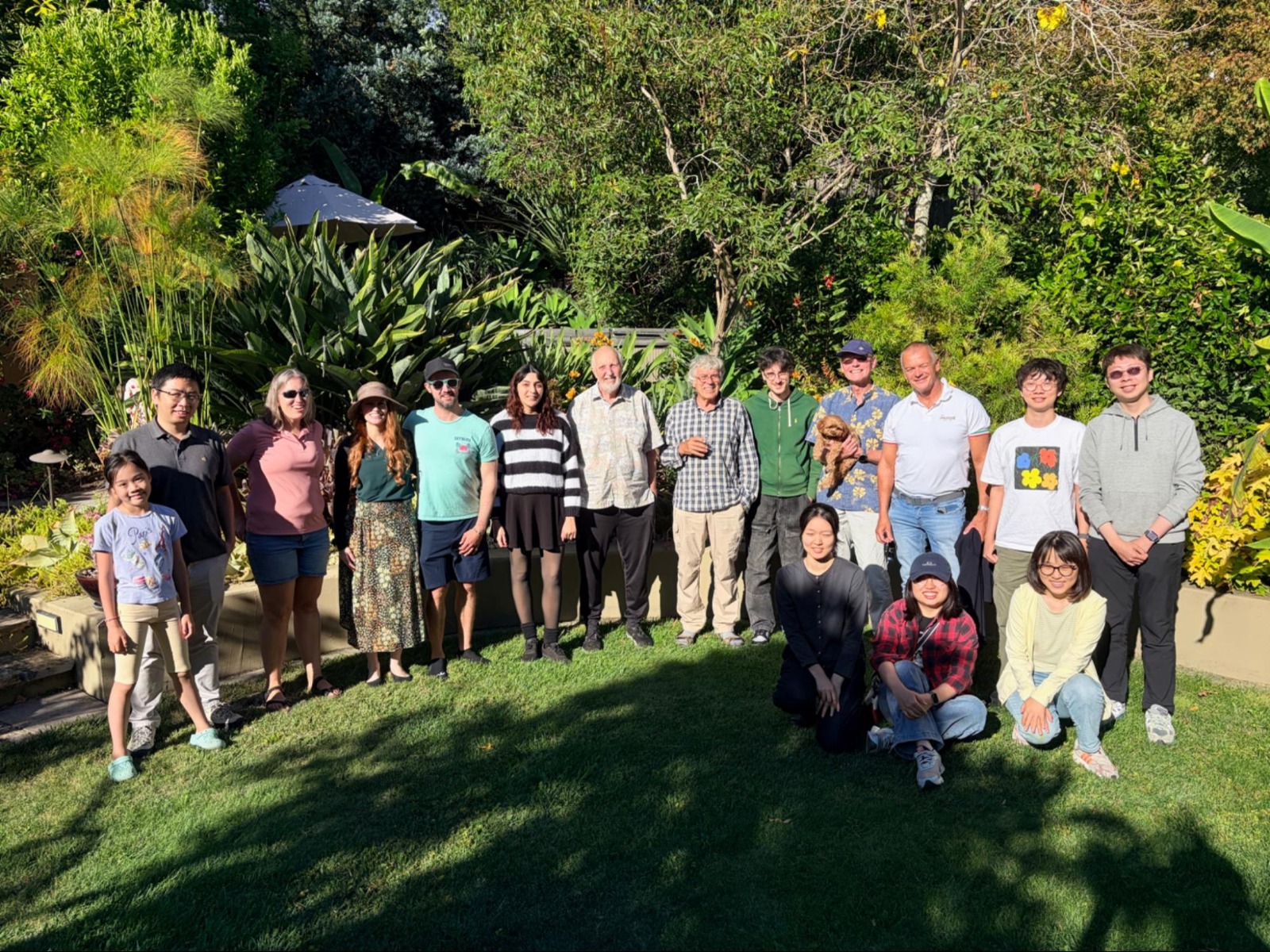
During her tenure at Berkeley, Dr. Becerra is modeling seafloor deformation off Taltal and the effects of accumulated seismic energy using IDOOS data, through an international research fellowship funded by SZ4D/SZNet.
Dr. Valeria Becerra Carreño, postdoctoral researcher at the Millennium Institute of Oceanography (IMO in spanish), is spending the month of September at the Berkeley Seismological Laboratory at the University of California , working under the mentorship of Professor Roland Bürgmann.
Dr. Becerra, who holds a Ph.D. in Engineering Sciences, was selected for a 30-day early-career research fellowship. Focused on the study of subduction zones, the stay is funded by SZNet —a support network backed by the National Science Foundation’s AccelNet at the program—in collaboration with the Subduction Zones in Four Dimensions (SZ4D), as part of a scientific exchange partnership between Chile and the United States.
The collaboration with Berkeley was facilitated through Dr. Marcos Moreno, Deputy Director and Principal Investigator at IMO, who connected Dr. Becerra with Prof. Bürgmann following her application to the program last year. During her stay, the researcher is “leveraging data from seafloor pressure sensors deployed by the Deep Ocean Observing System (IDOOS) to model seafloor deformation off the coast of Taltal (Antofagasta Region) and to understand how accumulated seismic energy impacts this deformation".
Additionally, Dr. Becerra highlighted the vibrant academic environment and the opportunity to master new computational tools for modeling subduction processes, noting: “There is exceptional synergy among researchers here, with frequent seminars and active scientific discourse, which is essential for producing high-quality science. The atmosphere is noticeably collaborative and supportive".
Fostering the Next Generation of Researchers
For Dr. Becerra, opportunities like this fellowship are made possible by the scientific ecosystem promoted by the IMO, which "brings together top-tier researchers with extensive international networks who consistently encourage early-career researchers and students to pursue these opportunities".
"The IMO provides financial support for many events of this nature, firmly aligned with the philosophy of enabling us to experience these milestones of scientific growth and expand our own professional networks”, she concluded.